Designing a persona system for consistent AI content
People retyped their brand voice into every prompt. Half skipped the persona builder I shipped for it, so version two learned from the retyping instead.
- Mine
- Product strategy
- User research
- Interaction design
- UI design
- Shared
- AI behaviorwith eng
- Rolloutwith lead dev
- Not mine
- Model and prompt engineering
The situation
AI is flexible. Brands are not.
MoFlo could generate captions and visuals well. What it couldn't do was sound like the same company twice.
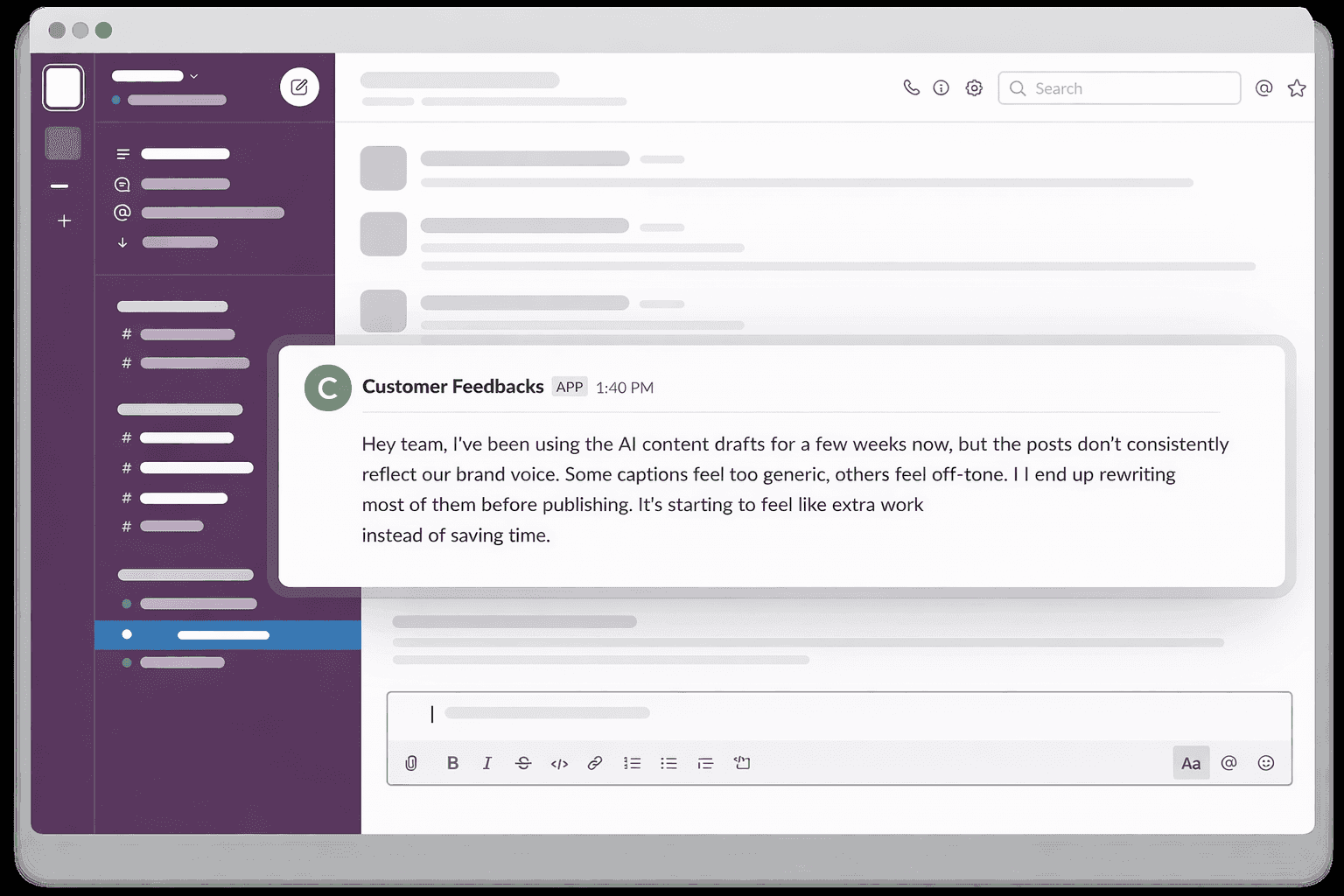
Usage data agreed: high draft generation, low direct publish, frequent edits before scheduling.
The AI wasn't reducing effort. It was relocating it.
Research
Adjectives. Nobody actually thinks in them.
Asked about brand voice, people talked about audience and intent.
Asking for tone was the wrong question.
First attempt
I shipped a builder. Adoption did not follow it.
Version one had people define their brand up front, then apply it at generation.
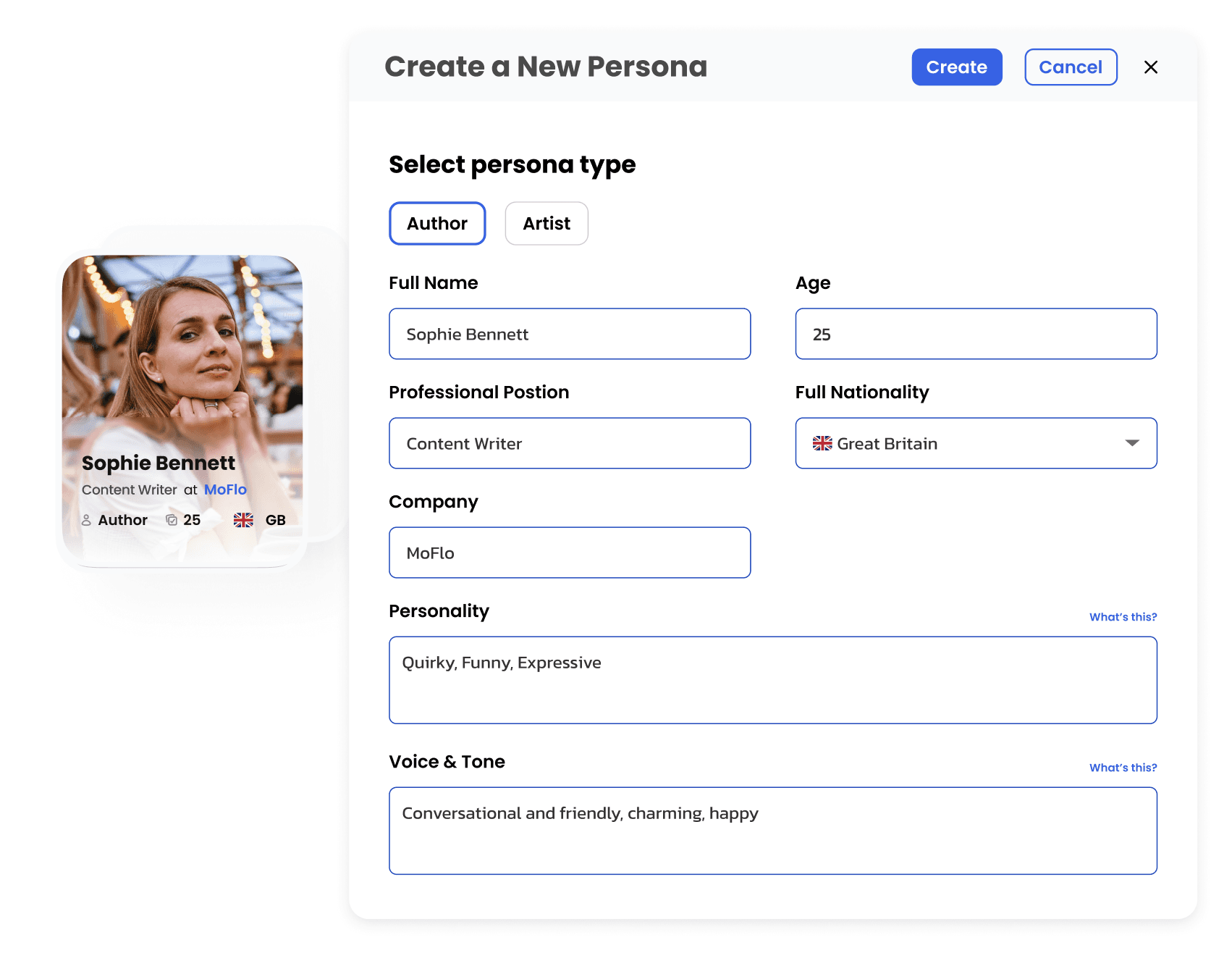
Reuse was the point.
Setup up front, payoff invisible: the rules applied silently.
The rethink
Stop asking. Offer an identity, then let them adjust it.
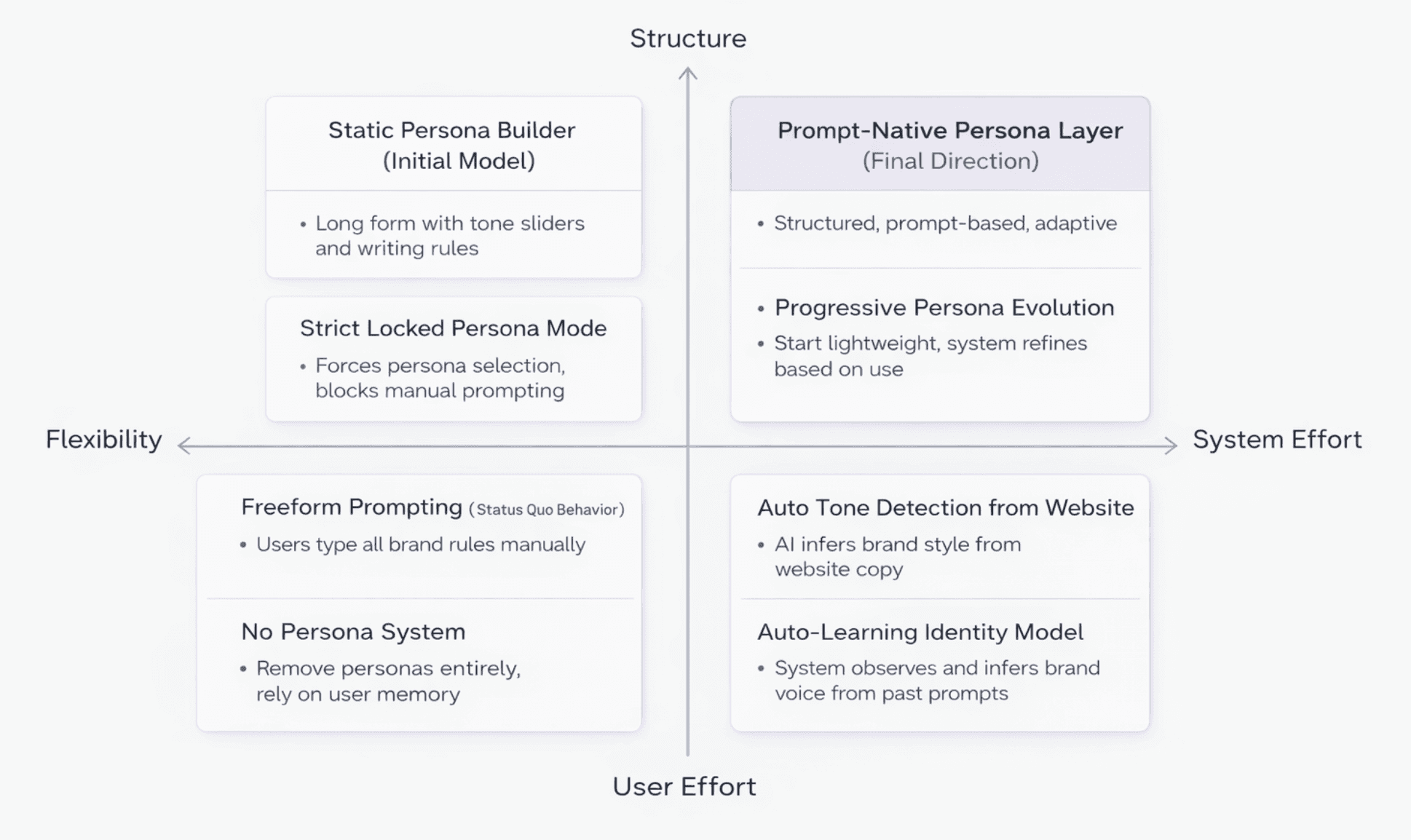
The goal was never to eliminate prompting. It was to eliminate repetition.
What shipped
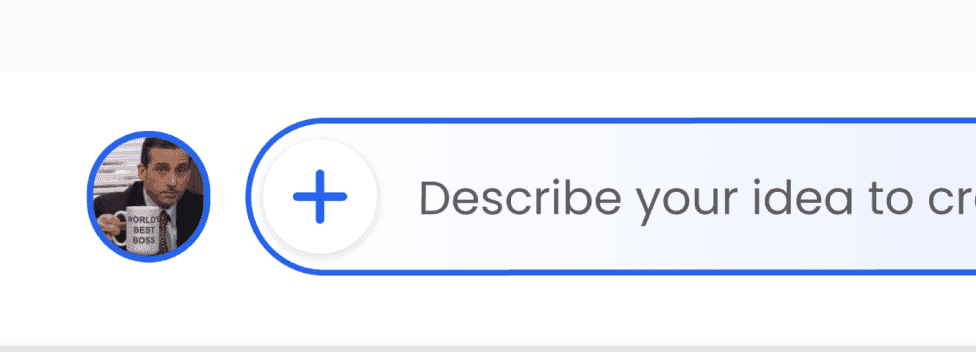
Identity moved down. It now sits where the work happens.
The challenge
Wrong twice. Nobody reads the third suggestion.
The bridge took the longest: "detect a tone rule and offer to save it" hides three decisions.
I defined what a false positive is: the product claiming to know someone's brand better than they do.
Version one asked for setup. Version two asks for confirmation.
Impact
One month in. What the numbers actually did.
🎉 BIG NEWS! We're now OPEN ON WEEKENDS! 🎉 That's right, you asked, we listened! Book your appointment today and experience the difference. Don't miss out! Link in bio 👇 #weekendvibes #bookNow #smallbusiness
We're open Saturdays and Sundays starting this weekend. Same team, same hours you're used to on weekdays. If a weekday appointment has been the thing standing in your way, this is the fix. Booking link below.
The first could be any business. The second is theirs.
Reflection
Absorb the habit. Correcting it only loses the person.
AI features rarely fail for lack of capability. They fail when they misalign with what people already do.
Reduce repetition, not control. Make the reasoning visible; invisible correctness earns no trust.
- Role
- Founding Product Designer
- Team
- Founding Product Designer (Me), CTO, Lead Developer
- Timeline
- 4 Weeks
- Tools
- Figma (Design, Make, Jam), Claude Code, Lottielab, v0